Student achievement and perceptions of virtual reality compared to light microscopy in blood cell identification: Pilot study in laboratory technology education
DOI:
https://doi.org/10.17532/jhsci.2026.3116Keywords:
Students, light microscopy, virtual reality, blood cellsAbstract
Introduction: In modern health sciences education, the emergence of virtual reality (VR) has introduced new approaches to learning; however, its application in the study of blood cell morphology remains underexplored. This study aimed to compare student performance and the time required for blood cell identification using light microscopy (LM) and VR, as well as to assess students’ perceptions of VR and their readiness for its integration into the teaching process.
Methods: This pilot study used a within-subject comparative design involving two modalities (LM and VR). It was conducted at the Institute for Health Development, University of Sarajevo – Faculty of Health Studies, during April and May 2026 and included 24 participants. The study protocol encompassed the digitization of hematological preparations, the development of VR and web applications, and comparative testing.
Results: The use of VR resulted in a statistically significantly higher overall percentage of correct cell identifications compared with LM (73.9% vs. 58.0%; p < 0.001). By cell lineage, participants using VR achieved significantly higher
accuracy in identifying cells of the erythroid lineage (80.3% vs. 65.9%; p < 0.001) and leukocytic lineage (67.4% vs. 49.2%; p < 0.001). The time required for blood cell identification was reduced by 26.7% with VR across all three cell
lineages. Participants showed positive attitudes toward VR, with an increase of 0.35 in the overall post-test score (95% CI: 0.15-0.55; p = 0.002).
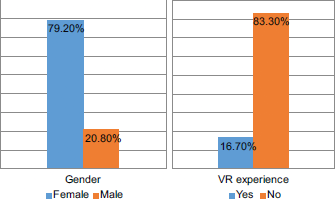
Conclusion: VR demonstrated potential as a useful tool for blood cell identification, particularly by enabling detailed visualization of morphological characteristics in cells of the erythroid and leukocytic lineages. High ratings for ease of use, despite limited prior VR experience, suggest that integrating VR into the educational process is both feasible and practical, with minimal additional burden on students and teaching staff.
Downloads
Downloads
Published
License
Copyright (c) 2026 Emsel Papić, Arzija Pašalić, Amela Ibišević, Haris Hodžić, Sabina Šegalo

This work is licensed under a Creative Commons Attribution 4.0 International License.